6 Simple Home Organization Ideas for Small Spaces
Keeping a home organized can be challenging when storage space is limited. Everyday items accumulate on tables, countertops, and shelves, making it harder to find what you need.
Fortunately, improving organization does not always require new furniture or a major renovation.
These six practical ideas focus on making better use of existing spaces and creating storage systems that are easy to maintain.
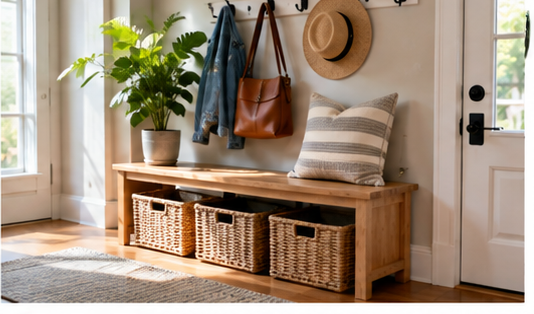
1. Create a Dedicated Entryway Area
The entryway is often where shoes, keys, bags, and jackets collect.
Designate a small area near the entrance for frequently used belongings. A narrow bench, a few wall hooks, or a compact basket may provide enough storage.
Choose hooks and organizers suited to your wall type and the weight of the items they will hold.
Keeping everyday essentials in predictable locations can simplify your morning routine.
2. Use Vertical Wall Storage
When floor space is limited, walls may offer additional storage opportunities.
Floating shelves, wall-mounted organizers, and hanging baskets can help organize books, accessories, and decorative items.
Before installing shelves, check the wall material and follow the manufacturer’s mounting instructions.
Avoid placing heavy items above beds or seating areas. Keep frequently used objects at comfortable, accessible heights.
3. Organize Drawers with Dividers
Drawers often become cluttered when small items are mixed together.
Simple dividers can create separate areas for utensils, stationery, clothing accessories, or craft supplies.
Measure the drawer before purchasing organizers. Alternatively, clean cardboard boxes can work as temporary dividers for lightweight objects.
Group similar items together and leave enough room to remove them easily.
A simple arrangement is often easier to maintain than one with too many compartments.
4. Make Better Use of Closet Space
Closets may contain unused areas above or below clothing.
Consider adding shelf organizers, matching hangers, or labeled storage containers.
Seasonal belongings can be stored separately if they are not needed regularly.
Avoid overcrowding shelves or stacking heavy containers where they might fall.
Review clothing periodically and consider donating usable items that no longer fit your needs.
5. Keep Kitchen Counters Clear
Kitchen counters are more practical when frequently used work areas remain accessible.
Store appliances according to how often you use them. Everyday items might stay within reach, while occasional equipment can be placed in cabinets.
Small trays can help group suitable cooking accessories.
Keep storage away from hot burners, electrical hazards, and areas requiring food preparation.
Review expired pantry products regularly and organize ingredients so their labels remain visible.
6. Establish a Short Daily Reset
An organized home is easier to maintain when items have designated places.
Try spending ten minutes each evening returning objects to their usual locations.
Focus on high-traffic areas such as the living room, kitchen, or entryway.
Other household members can participate by taking responsibility for age-appropriate tasks.
The goal is not perfection but a simple routine that reduces recurring clutter.
Choose Storage Based on Your Needs
Before purchasing organizers, identify the specific problem you want to solve.
Ask whether an item needs to be more accessible, better protected, or easier to locate.
Measure available space and consider repurposing containers you already own.
Buying additional storage products without reducing unnecessary belongings can sometimes create more clutter.
Final Thoughts
Organizing a small home begins with practical decisions about how space is used.
By creating designated storage areas, using suitable organizers, and developing manageable habits, you can make everyday belongings easier to find.
Start with one drawer, shelf, or corner and expand your approach as needed.