Before throwing away an empty jar, an old T-shirt, or a cardboard box, consider whether it could serve another purpose.
Reusing everyday items is a practical way to explore DIY projects without starting with a long shopping list. Some projects provide extra storage, while others create decorations or useful household accessories.
Here are six ideas you can try using materials you may already have at home.
1. Turn Glass Jars into Useful Storage Containers
Empty glass jars can be useful for organizing small household items.
Start by washing the jars thoroughly with warm water and dish soap. Remove labels and allow the glass to dry completely.
Depending on their size, clean jars can hold:
- Buttons and sewing supplies
- Pencils and paintbrushes
- Hair accessories
- Small craft materials
- Individually wrapped items
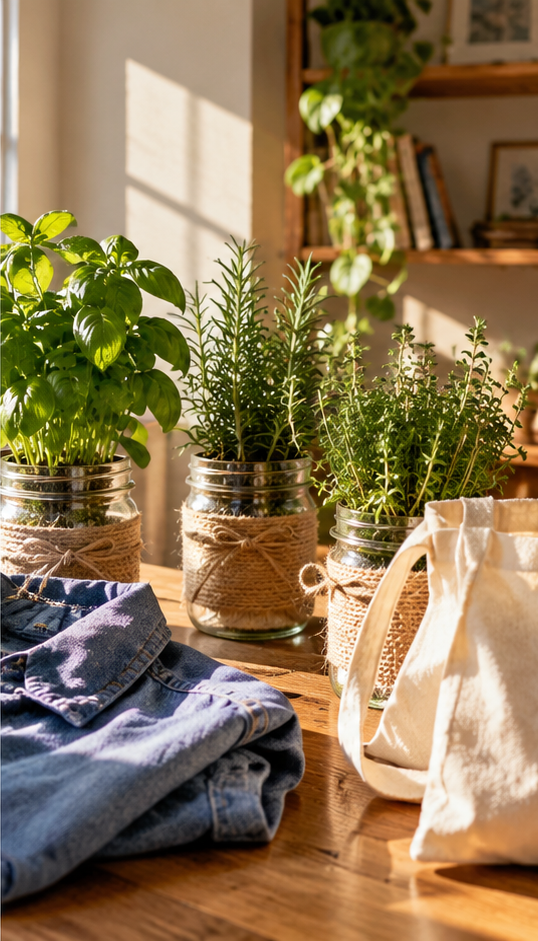
To decorate a jar, wrap twine around the outside or attach a paper label.
For kitchen use, make sure a jar is suitable for the intended food and storage conditions. Do not assume that a reused jar is safe for home canning or heat processing.
Avoid using cracked or chipped glass.
2. Make Reusable Cleaning Cloths from Old T-Shirts
A worn cotton T-shirt may no longer be suitable for everyday clothing, but its fabric can still be useful.
Lay the shirt on a flat surface and cut it into rectangular pieces. Remove seams or thick decorative sections if they make the cloth difficult to use.
Soft cotton pieces can be helpful for dusting furniture, wiping shelves, or cleaning other suitable surfaces.
Use separate cloths for different cleaning tasks to reduce cross-contamination, and wash them according to the fabric’s care requirements.
If a cloth has been used with strong cleaning chemicals, follow the product’s disposal and laundering instructions.
3. Create Drawer Organizers from Cardboard Boxes
Small cardboard boxes can help organize drawers containing office supplies, accessories, or craft materials.
Choose several boxes that fit inside the drawer. Trim their height if necessary, and arrange them to create compartments.
You can cover them with leftover wrapping paper or decorate them with markers.
This approach works particularly well for:
- Pens and pencils
- Stationery
- Socks and small clothing accessories
- Craft supplies
- Charging cables stored without power connected
Keep cardboard away from moisture, open flames, and heat sources.
4. Use Old Fabric to Create Gift Wrapping
Instead of buying decorative gift wrap for every occasion, consider using suitable fabric left over from other projects.
A scarf, fabric square, or piece of clean cotton can be folded around a gift and secured with a reusable ribbon.
The wrapping can become part of the gift or be used again.
Choose fabric that is clean, free from sharp decorations, and large enough to cover the object comfortably.
For a personal touch, attach a small handwritten message or a reusable gift tag.
5. Transform Tin Cans into Desk Organizers
Clean, empty food cans can be turned into holders for pencils, rulers, or craft tools.
Wash and dry each can thoroughly. Inspect its rim before using it. Some opened cans have very sharp edges that must be made safe, and cans with unsafe rims should not be used for this project.
Decorate the exterior using paper, paint appropriate for metal, or adhesive fabric.
A collection of containers in different sizes can make a convenient desk organizer.
Keep unfinished metal edges and small decorative materials away from young children.
6. Create Simple Planters from Reused Containers
Some household containers can be reused as planters for small herbs or decorative plants.
Choose a container that is sturdy, clean, and suitable for the plant. Most plants need adequate drainage, so the container should allow excess water to escape.
If drilling drainage holes is appropriate, an adult should use the correct tools and protective equipment. Alternatively, place a nursery pot with drainage holes inside a decorative outer container and empty collected water regularly.
Check the plant’s specific requirements for sunlight, watering, and pot size.
Avoid reusing containers that previously held hazardous chemicals.
How to Choose the Right Reuse Project
Not every item is suitable for a second purpose.
Before beginning, consider three practical questions:
Is the material safe? Inspect for broken glass, sharp metal, damaged electrical components, or chemical residue.
Will the finished object be useful? A project that solves a real storage or organization problem may be more valuable than something that quickly becomes clutter.
Can the project be completed with available supplies? Reusing materials is most practical when it does not require buying many additional items.
For beginners, organizing a drawer with cardboard boxes or decorating a clean jar can be a good first project.
Final Thoughts
Reusing household items does not require advanced crafting skills or specialized equipment.
By starting with simple materials and focusing on practical uses, you can turn everyday objects into useful additions to your home.
Choose one small project, follow sensible safety precautions, and experiment with designs that fit your needs and personal style.