Strength training does not always require a gym membership or complicated equipment. Many introductory exercises can be performed at home using body weight, resistance bands, or light weights.
For beginners, the goal is to become familiar with basic movements while gradually developing a manageable exercise routine.
Understanding a few important principles can help make the experience more comfortable.
What Is Strength Training?
Strength training involves movements that challenge muscles by working against resistance.
Resistance may come from your body weight, handheld weights, elastic bands, or specialized machines.
Common exercises involve movements such as pushing, pulling, standing, and lifting.
Regular strength training can support muscular strength and physical function, although individual results vary.
It is important to choose exercises appropriate for your abilities.
Prepare a Safe Exercise Space
Before starting, select an area with enough room to move freely.
Remove loose objects, check for slippery surfaces, and make sure any equipment is in suitable condition.
A stable chair or wall may provide support for certain beginner exercises.
Wear comfortable clothing and footwear appropriate for the movements you plan to perform.
If you have a medical condition, recent injury, or concerns about exercising safely, consult a qualified healthcare professional before beginning.
Explore Basic Bodyweight Exercises
Several beginner exercises require little or no additional equipment.
Chair sit-to-stand: Sit on a stable chair and practice standing up and sitting down slowly. Use support when needed.
Wall push-ups: Place your hands against a sturdy wall, bend your elbows comfortably, and push back to the starting position.
Standing calf raises: Hold a stable surface for balance and slowly raise and lower your heels.
Focus on controlled movements rather than completing a large number of repetitions.
Stop any exercise that causes pain.
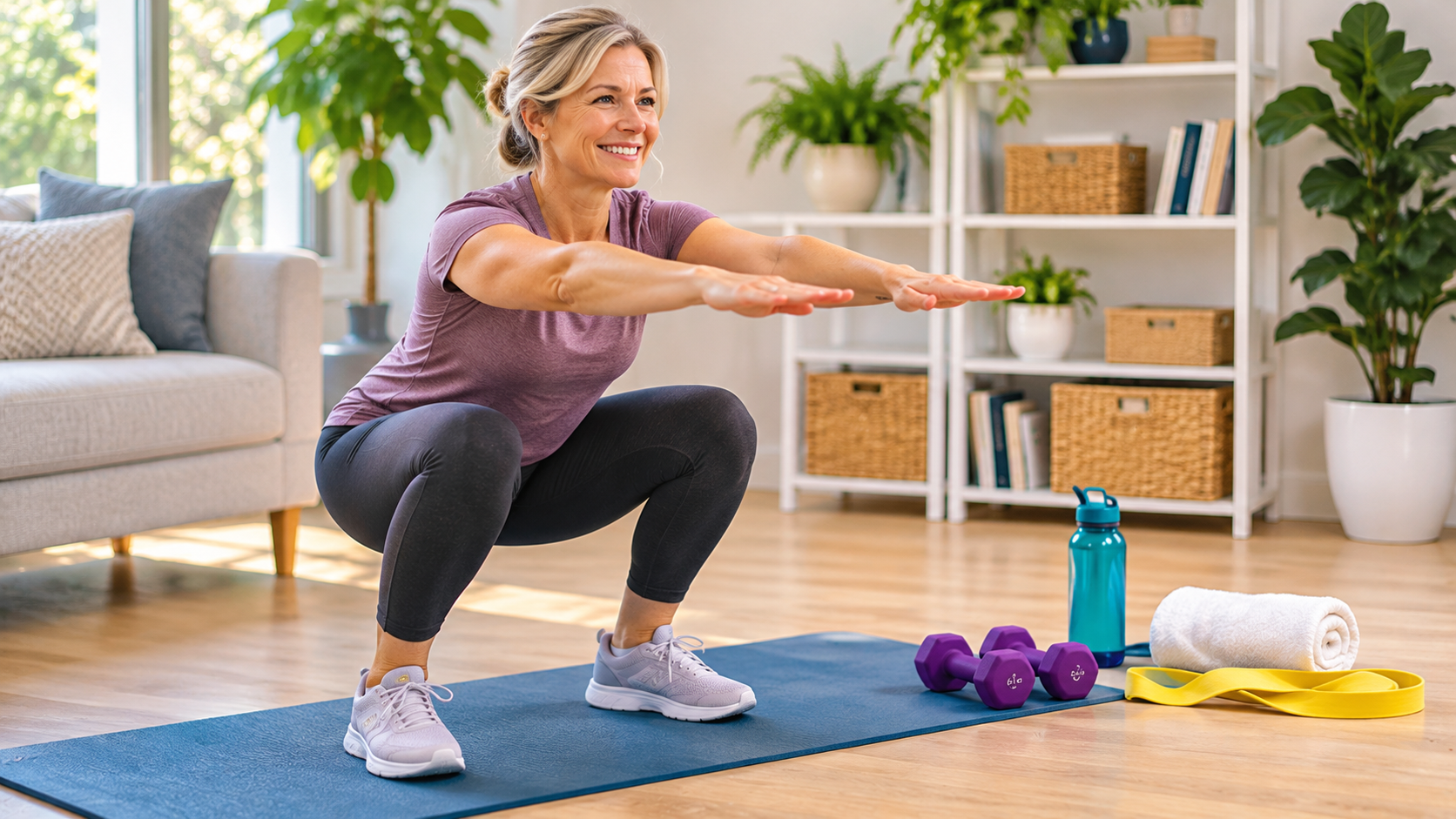
Learn About Resistance Bands
Resistance bands are flexible exercise tools available in different levels of resistance.
They can be used for movements involving the arms, shoulders, and other muscle groups.
Check bands for damage before using them and follow the manufacturer’s instructions.
Avoid positioning a stretched band where it could snap toward your face.
Beginners may find it helpful to learn correct technique from a qualified fitness professional.
Allow Time for Recovery
Muscles need appropriate recovery between challenging exercise sessions.
New strength-training activities may cause temporary muscle soreness, especially when movements are unfamiliar.
Plan rest or lighter activity between sessions that work the same muscle groups.
Do not interpret severe or persistent pain as a normal requirement for progress.
Recovery needs differ depending on exercise intensity, health, and individual circumstances.
Create a Practical Weekly Plan
A beginner might start with one or two appropriately spaced strength sessions each week, depending on their abilities and professional guidance.
Keep sessions short enough to maintain good technique.
A simple routine could include a brief warm-up, a few basic movements, and a gradual cool-down.
As movements become familiar, review whether your routine needs adjustment.
Increase difficulty gradually rather than changing resistance, repetitions, and duration simultaneously.
Final Thoughts
Beginning strength training at home is primarily about learning safe movements and establishing realistic habits.
You do not need elaborate equipment to explore basic exercises.
Choose an appropriate starting level, allow time for recovery, and make gradual changes as your confidence and experience develop.